
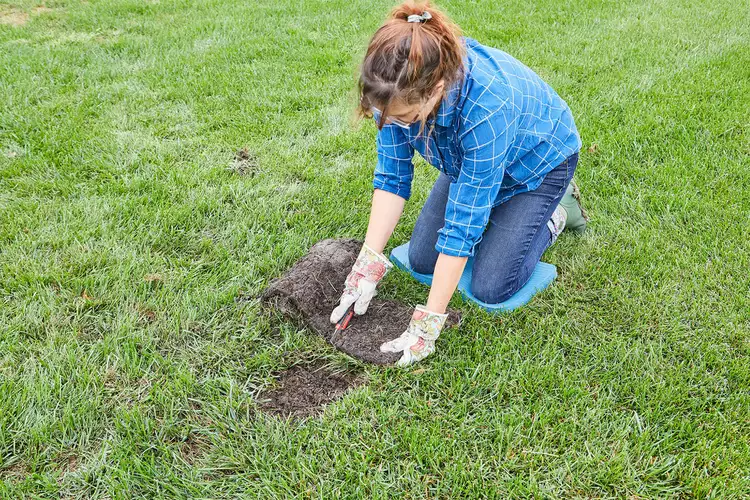
Sod is a hefty investment, so it's critical to know how to plant sod, including preparing the planting area and tending the turf with care. You can lay sod anytime during the growing season, although spring and early autumn are best—cool temperatures combined with occasional rain help sod quickly root. Follow these steps to how to plant sod the right way the first time.
How to Plant Sod
Every step in the process of laying sod is essential to keep your lawn healthy and happy. Preparing for the sod before laying it down and caring for it after it's in place will help yield the longest-lasting results.
Step 1: Prepare the Soil
Remove twigs, stones, and other debris from the area to prepare the soil. Do a quick soil test to evaluate the area and its nutrient components. It's good to know what you're working with before you lay down the sod—you may want to amend the soil while you're at it. If your soil test indicates a low pH level, you'll need to add lime, dolomite limestone, or wood ashes to your soil. Add horticultural sulfur, composted oak leaves, or pine needles if your soil contains a high pH level.
:strip_icc():focal(857x608:859x610):format(webp)/rake-on-dirt-patch-in-grass-6066a328-978cc377fe9347a5b7098dc740ca8576.jpg)
:strip_icc():focal(1006x198:1008x200):format(webp)/woman-pouring-fertilizer-on-prepared-ground-6b697127-3f15fee77113441ca12bb907660de11f.jpg)
:strip_icc():focal(838x359:840x361):format(webp)/scooping-soil-from-bag-onto-grass-1dfea08a-3a506498aa7d4a2c824b60798d52965f.jpg)
Step 2: Fill with Top Soil
Break up soil clods that are larger than 2 inches in diameter. Fill low areas with good-quality topsoil. Work in organic matter if the soil is sandy or full of clay. Take advantage of this opportunity to improve the soil; adding amendments is easy when the soil is bare.
Step 3: Smooth the Soil
Smooth the soil with a stiff garden rake. Be sure to distribute any bumps or piles of soil to create a flat area. Finish preparing the area by compacting it slightly with a lawn roller.
:strip_icc():focal(876x558:878x560):format(webp)/cutting-sections-of-sod-on-grass-e3d87325-24358de79c294619b4848198570ebddc.jpg)
:strip_icc():focal(894x745:896x747):format(webp)/placing-sod-on-the-grass-fc2290ed-fdcec5e9b335444d8d40f70bd2df324d.jpg)
:strip_icc():focal(876x770:878x772):format(webp)/woman-pressing-the-grass-4bf03d6b-86b12f752135468e83863b68f7c25ac5.jpg)
Step 4: Lay Sod
Lay sod on a cool, overcast day to minimize plant stress. For how to plant sod in the heat of summer, moisten the surface of the planting area before putting down the turf. Stagger strips in a brick-like pattern, and be sure that all pieces fit tightly together. A utility knife or sharp spade is handy for cutting sod to fit irregular areas. Once the sod is in place, run the sod roller over it to eliminate air pockets.
Step 5: Water Sod Daily
Water it immediately, then water daily (depending on rainfall), moistening the soil to a depth of 4 inches until the sod takes root (in 2 to 3 weeks). Avoid mowing sod until it has firmly rooted. To find out if sod has rooted, gently tug at it. If you feel resistance, roots are anchored in the underlying soil.