
Cilantro is a fast-growing, annual herb that’s mostly grown for its fresh leaves, which can be mixed into salsa, salads, and lime rice. But once you learn how to harvest cilantro leaves, you may want to let your herbs grow a little longer and also harvest cilantro seeds, otherwise known as coriander. Whether you’re growing herbs for leaves or seeds, you’ll find all the cilantro harvesting tips you need below.
When to Harvest Cilantro
Cilantro is a cold hardy herb that’s typically planted in early spring herb gardens and harvested before summer hits. But cilantro can also be succession planted every few weeks through early summer, and again in late summer for an autumn harvest.
When plants are grown from seed, cilantro leaves should be ready to harvest about 50 to 60 days after planting. Coriander seeds, on the other hand, take longer to mature and are typically ready to pick about 120 days after planting. That said, some varieties of cilantro mature faster than others and fast growing cilantro may be ready to harvest in just a month.
To get the best tasting cilantro leaves, harvest cilantro in the morning before the plant starts to flower. Cilantro plants are ready to harvest when they’re at least 4 weeks old, over 6 inches tall, and have plenty of healthy stems and leaves.
Most gardeners use cilantro as a cut-and-come-again herb in their culinary gardens and harvest stems and leaves as needed for recipes. But cilantro plants will bolt in hot weather, so it’s best to harvest the entire plant before summer unless you want to gather coriander seeds. You’ll know cilantro is about to bolt when the plant starts growing elongated stems and small leaves that look a bit like carrot greens.
How to Harvest Cilantro Without Killing the Plant
Cilantro can be harvested little by little for cooking, or it can be harvested in a larger quantity for freezing or drying. Generally speaking, it’s best to harvest only as much cilantro as you can use right away since fresh cilantro doesn’t last long in the fridge. However, plants should be harvested in their entirely before they bolt or are damaged by fall frosts.
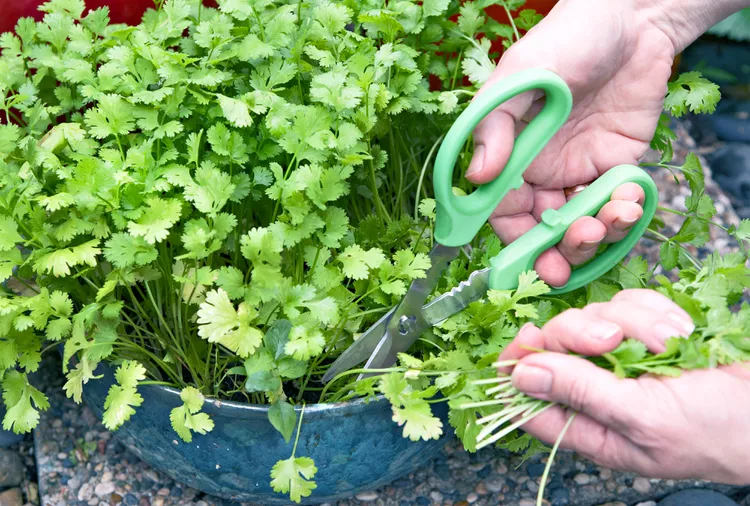
To harvest a small quantity of cilantro for cooking, use your fingers or sharp scissors to clip off the stems you need about 1 inch above the soil line. To keep these edible plants productive, harvest the older, outer leaves of the plant first and leave the center of the plant untouched. Small harvests of cilantro can be taken every few days without compromising the health of the plants.
To harvest a larger quantity of cilantro, gather a handful of stems in one hand and use scissors to clip them off 1 inch above the soil line. Even though cilantro is a fast-growing herb, it can be vulnerable to overharvesting, so only harvest about a third of your plant at one time and wait at least 2 weeks before taking another large harvest. If you use a lot of cilantro in your cooking, consider growing additional cilantro plants and take smaller harvests from each plant to avoid overharvesting.
Harvesting cilantro regularly can delay bolting and prolong your harvest of fresh cilantro leaves; however, these edible plants will eventually bolt and go to seed in hot weather. But bolting can be a good thing if you want to harvest coriander seeds.
Harvesting Cilantro Seeds
Cilantro seeds, or coriander, develop after the plants bolt and the flowers start to fade. At first, coriander seeds will look like tiny, green balls, but they turn brown as they ripen. Allow the coriander seeds to dry on the plant and then harvest them by clipping off the flower heads when the seeds turn a light brown color.
Loosely place the cilantro seed heads in a perforated paper bag and allow them to continue to dry indoors in a dry, dark place with good air flow. Once the seeds are completely dry, shake them free from the flower head and store them in airtight containers in your pantry.
How to Store Cilantro
Once you learn how to harvest cilantro from your garden, you need to make sure you're storing it properly so it's safe to eat. Because fresh cilantro wilts quickly, it’s best to eat cilantro as soon as possible after harvesting. However, if you harvest more than you can use right away, store cilantro in the fridge for about 3 to 7 days.
The easiest way to store cilantro is to place cut stems in a glass of water and cover the top of the glass and cilantro leaves with a zipper storage bag to lock in humidity. Store the glass in the fridge and replace the water daily to keep everything fresh. Alternatively, cilantro leaves can be wrapped in a damp paper towel and stowed inside a plastic bag in the crisper drawer.
If you want to store cilantro leaves even longer, fresh cilantro can be dehydrated with a food dehydrator and stored in airtight containers in the pantry, just like dried coriander seeds. Cilantro can also be flash frozen and stored in airtight baggies in the freezer or it can be chopped and frozen in ice cube trays filled with oil or water.