
• HOME
  • Container Gardens
  • Edible Gardening
  • Caring for Your Yard
  • Pest & Problem Fixes
  • Trees, Shrubs & Vines
  • Gardening Routine
  • Terms of Use
  • About Us
  • Privacy Policy
classlw.topclasslw.top
  • HOME
  • Container Gardens
  • Edible Gardening
  • Caring for Your Yard
  • Pest & Problem Fixes
  • Trees, Shrubs & Vines
  • Gardening Routine
classlw.top classlw.top
classlw.top » Edible Gardening » When and How to Harvest Thyme Without Killing the Plant
Edible Gardening

When and How to Harvest Thyme Without Killing the Plant

42.4K
423
135
When and How to Harvest Thyme Without Killing the Plant

Thyme is a woody-stemmed herb from the Mediterranean region that lends big flavor to foods with its tiny leaves. Knowing how to harvest thyme correctly is important to prevent too much woodiness. Also, if you pick too much of this herb at once, you risk damaging or even killing the plant. This guide explains when and how to harvest thyme to ensure you get the freshest herbs and keep your thyme plants healthy.

When to Harvest Thyme

Harvesting thyme regularly keeps thyme plants from becoming woody and encourages plants to leaf out and produce more branches. Harvesting thyme throughout the season provides your kitchen with all the fresh thyme you need for your favorite recipes. However, thyme can be harvested in different ways, depending on how you want to use the fresh herbs and if you intend to dry them.

For the best result, pick thyme in the early morning after the dew has dried on the plant’s leaves. This enhances the flavor of thyme leaves and helps ensure the fresh thyme dries quickly.

If you need only a sprig or two of thyme to use in cooking, you can harvest the thyme at any point during the growing season by clipping away a few branches. Fresh thyme sprigs regrow quickly, and since you’re not taking many leaves off the plant, you don’t need to worry about overpruning.

However, if you want to harvest a large amount of thyme for drying, only harvest thyme two or three times a year. Ideally, large thyme harvests should occur in spring and again in early summer, right before thyme plants flower. Harvesting thyme before the plant blooms results in the tastiest herbs because the plant’s leaves are packed with flavorful oils at this point in the growing season. If needed, thyme plants can be harvested again in August, but harvesting thyme later than that is not recommended because the plants need time to recover before winter.

How to Harvest Thyme Correctly

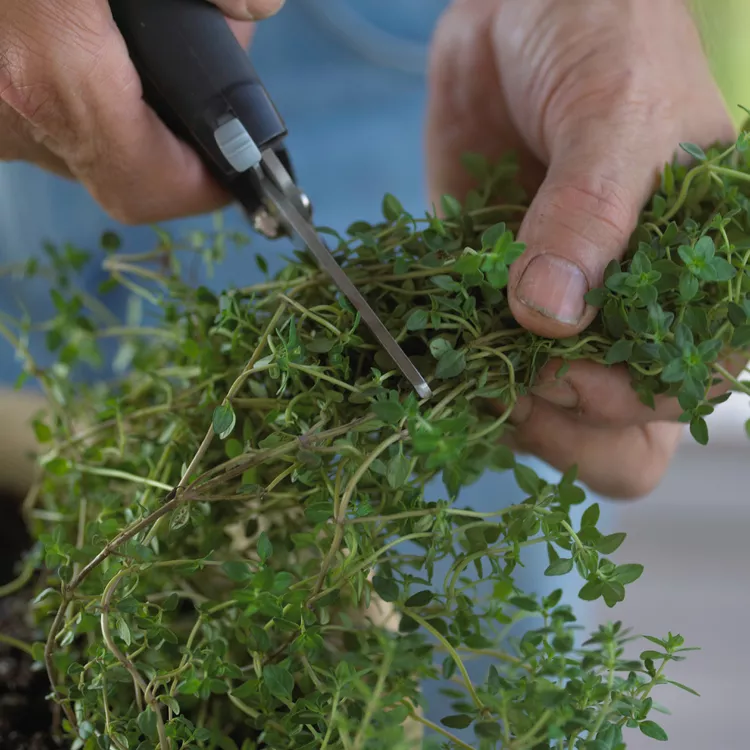
When you are harvesting only a few sprigs of thyme, clip off the thyme branches you need with sharp scissors or pruners. Cut young, tender thyme branches all the way down to the soil and woody branches immediately above a leaf node to encourage branching.

Keep rubber bands around your wrist when you harvest thyme, and bundle the thyme sprigs as you work. This keeps you from dropping the herb in your culinary gardens and makes it easier to air-dry the fresh thyme later on.

For larger thyme harvests, use sharp scissors or pruners and clip away the top one-third to one-half of the plant, making the pruning cut immediately above a leaf node. Start with the biggest, most mature thyme stems and work your way around the plant, harvesting and shaping the thyme as you go. Just make sure to never harvest more than half the height of the plant at one time and leave at least 5 inches of stems and plenty of green leaves on the plant after harvesting.

If you harvest more thyme than you can use, you can propagate thyme stem cuttings in soil with a bit of rooting hormone.

How to Store Fresh Thyme

You can use fresh thyme straight out of the garden or store it in your fridge for up to two weeks by wrapping thyme sprigs in a beeswax wrap or a plastic baggie. For longer-term storage, freeze thyme in ice cube trays or dry it by air-drying or with a food dehydrator.

When air-drying, hang small bundles of thyme in a cool, dark place that’s out of direct sunlight and allow the thyme to dry for one to two weeks. You’ll know the thyme is thoroughly dried when you can easily crumble the stems and leaves between your fingers. After the thyme is completely dry, store it whole in airtight containers for up to two years, and only crush or grind dried thyme just before you intend to use it to ensure the leaves retain their flavorful oils.

How to Continue Harvesting Thyme in Winter

Thyme will either stop growing or die down in winter and will start growing again during the spring. However, if you want to continue harvesting thyme during the colder months of the year, you can plant it in potted containers and bring them indoors. Place them in a sunny location with loamy, well-draining soil to continue your harvest.

Frequently Asked Questions

  • Can I eat the flowers on thyme?

    Although thyme leaves taste best if you harvest them before the plant flowers, you can still eat thyme leaves and flowers after the plant blooms. Dainty and colorful, thyme flowers make charming garnishes for salads, soups, and desserts.

  • What temperature do you use to dry thyme?

    Thyme can be air-dried or dried in a dehydrator or an oven set at the lowest setting. For dehydrators and ovens, dry thyme at approximately 105°F until it easily crumbles in your fingers. This process takes about two to five hours.

  • When you chop thyme, do you keep the stems?

    Whether you chop thyme with or without the stems is a matter of personal preference. Thyme stems are technically edible; you can chop them up with the thyme leaves. However, mature thyme stems can be woody and tough, so you might want to remove them before chopping the thyme.

  • Is thyme a perennial or annual plant?

    Thyme plants are perennials that will come back every single year, so they won't need to be replanted in your herb gardens. On average, they will last between four and six years.

Related Posts

15.2K
1.4K
601

How to Plant Balled-and-Burlapped Trees & Shrubs

45.6K
1.4K
205

How to Plant and Grow Sky Vine

1K
61
22

10 Native Alternatives to Invasive Plants Growing in Your Garden

27.8K
1.9K
622

Your Seasonal Lawn-Care Schedule for the Pacific Northwest

43.8K
437
170

Is Electroculture Gardening the Next Great Thing in Plant Care?

2.2K
43
20

8 Beneficial Insects to Know (Plus How to Attract Them to Your Garden)

11.2K
895
375

How to Make an Adorable Broken Pot Fairy Garden in 4 Easy Steps

37.7K
1.1K
554

25 Gorgeous Hanging Basket Ideas to Dress Up Your Yard

39.5K
4K
592

15 Best Fall Flowers for Pots to Enjoy Some Late-Season Color

12.2K
1.2K
304

10 Front Porch Planter Ideas to Drape Your Entryway in Color

32.8K
1.3K
419

8 Steps to Fix a Lawn That’s All Weeds and Bare Patches

21.2K
424
195

How to Use a Compost Tumbler to Turn Scraps Into Garden Nutrients

5.5K
110
48

5 Best Ways to Water Raised Garden Beds of All Sizes Correctly

21.9K
1.5K
566

How to Get Rid of Crabgrass and Replace It with Actual Grass

46.5K
3.3K
520

8 Tips for Getting Rid of Squash Bugs Naturally Before They Devour Your Plants

23.9K
2.2K
581

How Can I Get Rid of Wiregrass?

34.9K
1.7K
575

2 Plants that Repel Ticks and Fleas from Your Yard

23.8K
951
247

10 Best Companion Plants for Kale

6.4K
386
108

6 Tips for Pruning Raspberries to Boost Your Harvest

27.6K
1.7K
794

How to Plant and Grow Cumin

How to Plant Balled-and-Burlapped Trees & Shrubs
How to Plant and Grow Sky Vine
10 Native Alternatives to Invasive Plants Growing in Your Garden
Your Seasonal Lawn-Care Schedule for the Pacific Northwest
Is Electroculture Gardening the Next Great Thing in Plant Care?
8 Beneficial Insects to Know (Plus How to Attract Them to Your Garden)
How to Make an Adorable Broken Pot Fairy Garden in 4 Easy Steps
25 Gorgeous Hanging Basket Ideas to Dress Up Your Yard
15 Best Fall Flowers for Pots to Enjoy Some Late-Season Color
10 Front Porch Planter Ideas to Drape Your Entryway in Color
8 Steps to Fix a Lawn That’s All Weeds and Bare Patches
How to Use a Compost Tumbler to Turn Scraps Into Garden Nutrients
5 Best Ways to Water Raised Garden Beds of All Sizes Correctly
How to Get Rid of Crabgrass and Replace It with Actual Grass
8 Tips for Getting Rid of Squash Bugs Naturally Before They Devour Your Plants
How Can I Get Rid of Wiregrass?
2 Plants that Repel Ticks and Fleas from Your Yard
10 Best Companion Plants for Kale
6 Tips for Pruning Raspberries to Boost Your Harvest
How to Plant and Grow Cumin
classlw.top ©2026
  • Terms of Use
  • About Us
  • Privacy Policy