
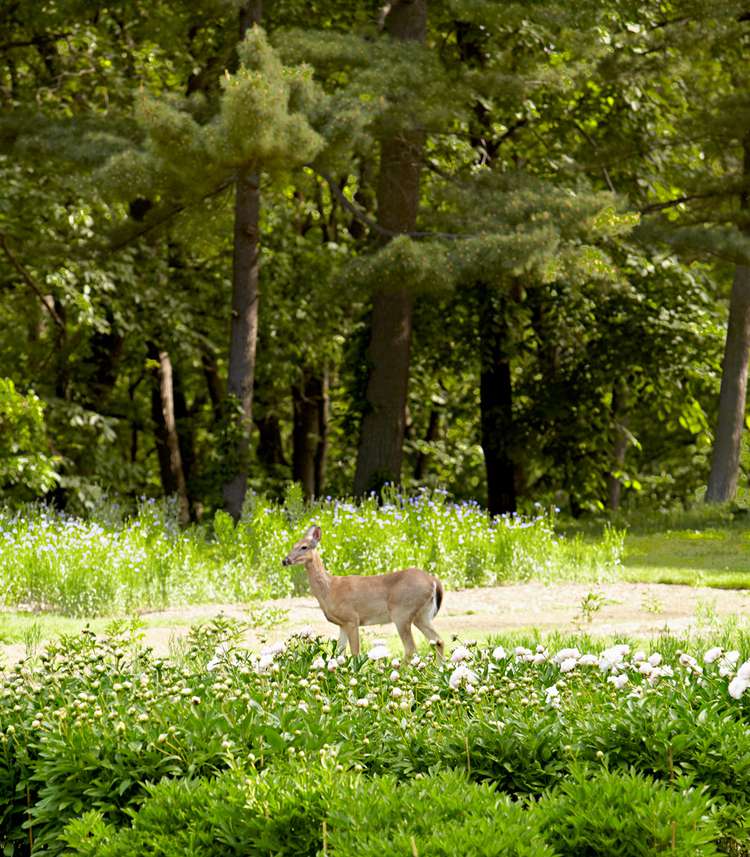
The sooner you learn how to keep deer from eating plants, the better chance you have of saving your flowers and veggies from being snacks for these critters. Once deer discover your yard is a delectable deli, they'll hop fences, ignore scare tactics, and show up like clockwork to devour plant after plant. They'll trot up to a porch to chew blooms off the roses or stretch high to nibble the clematis you thought were safe on an arbor.
Depending on what's available, hungry deer will eat almost anything (deer in different regions have different palates). There are plenty of methods for how to keep deer from eating plants and away from your garden that you can try, but it might take some experimenting to see what works best in your yard. One of the best ways to keep your garden safe is to fill it with deer-resistant plants they'll naturally avoid.
Plants That Deer Like to Eat
Deer often go for tender greens such as lettuce, pansy, ivy, hosta, and most young plants. Spring and early-summer plants, including tulips, lilies, and roses, seem especially appealing to deer, even if planted in containers. They feast on fruits of all kinds, from strawberries to fruit trees and fallen fruit. Deer will eat most trees and shrubs' bark, twigs, and leaves. They can also damage woody plants, especially during winter when food is scarce.
How to Identify Deer Damage
Clues that deer are visiting your garden include nibbled produce, roughly clipped leaves, buds and blossoms vanishing overnight, hoof prints in soil, and small piles of round black droppings. In the winter, scrapes on tree trunks and woody shrub branches are often from deer antlers. Deer can reach leaves as high as six feet, so scoring on trees that tall eliminates smaller animals as the culprit.
Odor Deterrents
When considering how to keep deer from eating plants, it's important to remember that many deer deterrents rely on odor, and effectiveness varies on how quickly the deer visiting your yard adjust to them. It's typical for many of these methods to only work for a few days. Some common deterrents to spread around your plants include:
- Hair
- Blood meal
- Garlic
- Fabric softener
- Repellent plants
Physical Deer Deterrents
Certain obstacles and items are good tools for how to keep deer from eating plants and away from your gardens. Fencing is the most obvious barrier, but thorny branches can be just as effective. More physical deterrent options include:
- Floodlights
- Hidden fishing lines
- Sprinklers
- Reflective surfaces (aluminum pie pans, streamers
- Netting
Garden-Protecting Fences
Installing a fence around the garden is how to keep deer from eating plants and out of your yard most effectively. A fence to keep deer out should extend partly underground and not have gaps bigger than 6x6 inches where deer can squeeze through or crawl under to get into your yard. Enclose the entire garden, or they'll go around the fence. A fence should also be at least 8 feet high.
Some deer can clear an 8-foot fence unless obstacles, such as angled netting, tree branches, or thorny shrubs, prevent a clear take-off or landing place. Or try two 4- or 5-foot-high fences placed 3 feet apart.
Netting for Plant Protection
Drape shrubs and small trees with garden netting, the same material used to keep birds off edible plants. You can also use netting and metal stakes to create a temporary fence around a small section of a garden. Black deer netting, also known as "invisible netting," is a good option for how to keep deer from eating your plants. It won't block the view of your garden but will keep deer out if it's 8 feet or taller.
Practice double fencing if you don't want to fence that high but still want to keep deer out of an area. Set up two lower net fences a few feet apart. Like hanging pie pans to trees and shrubs, you can attach shiny streamers to netting to scare deer away.
Noise Deterrents for Deer
Deer are easily spooked and can be kept away using noise deterrents like whistles and wind chimes. They also avoid electric wires because of the humming sound they make. The full list of noise deterrents includes:
- Noisemakers
- Flags
- Radios
- Whistles and chimes
- Electric wires
Deer Deterrent Sprays
There are DIY deer-defying sprays for plants, such as rotten egg and water, soap spray, and hot pepper spray, and there are also many types of commercial repellent sprays. Be sure to keep your deer repellent sprays as organic as possible.
Some people even try to lure deer away by planting the animal's favorite foods in a remote part of the property, far from gardens and flower beds.
How to Keep Deer from Eating Plants by Season
Deer (and their less common relatives, moose and elk) usually leave a path of destruction in the landscape and can destroy plants and trees every season. Unfortunately, applying a deer repellent spray once or twice a year is not how to keep deer from eating plants. Deer learn from experience, so repetitive applications will let them know they're not welcome in your rose garden. Although you should keep using deterrents every season, there are different methods to use that are appropriate for where the damage is worst and how the deer behave.
How to Keep Deer from Eating Plants in Fall
Mating season starts in the fall for the deer population, which means there will be larger groups of deer in one area (does and bucks are seeking each other out). Most flowers will be winding down from their blooming season, but it's the trees you need to worry most about. Fall is also when bucks scrape their antlers against trees to remove the velvety layer grown over the summer. The repetitive scraping can damage and even kill trees. Make sure to use deterrents to protect trees of any size.
How to Keep Deer from Eating Plants in Spring
After a winter of searching for accessible food, deer have huge appetites in the spring, and new shoots and buds are especially enticing. If you've had deer problems in the past years, they'll probably return in the following spring. Bobbex, a natural deer repellent brand, recommends spraying repellent every two weeks in spring or when one to two inches of new growth appears.
How to Keep Deer from Eating Plants in Summer
Lower-growing plants are at most risk in the summer, while trees and shrubs are of concern during the cooler seasons. Natural food choices are easier to find. But, when the weather turns hot and dry, natural vegetation in forests and fields can get scorched and die off, forcing deer to look at your well-groomed landscaping for lush greens. Summer is a good time to employ motion-activated sprinklers (your plants will probably benefit, too) to scare deer away. Harvest your fruits and vegetables regularly and plant some aromatic herbs around your edibles and ornamentals that deer don't like.
Deer-Resistant Plants by Region
Some plants are especially effective in different regions of the country. Here are the best choices depending on your location.
Southeast
Northeast
Pacific Northwest
- Barrenwort
- Bellflower
- Foxglove
- Ligularia
- Meadow rue
- Oregano
Deer-Resistant Plants for Your Yard
Deer steer clear of toxic, fuzzy, coarse, spiny, bitter, or highly aromatic plants. But if deer are unclear about liking something, they'll try it, so even things they don't like aren't always safe to plant. It's a good idea to start designing your garden with known deer-resistant plants.
Deer-Deterring Trees
Deer may not completely avoid these trees, but they're less likely to munch on them than other options. If you've had problems with pests in the past, consider planting some of these trees:
- Black locust
- Cedar
- False cypress
- Ginkgo
- Hackberry
- Hawthorn
- Japanese maple
- Magnolia
- Oak
- Palm trees
- Spruce (usually)
Shrubs That Deer Avoid
One of the best ways to prevent deer from eating your plants is to choose shrubs that they won't enjoy. Here are a few options that should be safe from nibbling deer:
- Abelia
- Golden bamboo
- Heavenly bamboo
- Barberry (usually)
- Boxwood
- Burning bush (some varieties)
- Butterfly bush
- Cotoneaster
- Currant
- Daphne
- Flowering quince
- Heath
- Holly
- Lilac
- Mahonia
- Mountain laurel
- Pieris
- Potentilla
- Smoke tree
- Spirea
- St. John's Wort
- Sumac
- Tamarisk tree
- Viburnum
- Yucca
Perennials That Deer Avoid
If you plant a few perennials to keep deer away, the plants will come back each year with minimal effort on your part. Here are some of the best perennials for discouraging hungry deer:
- Ajuga
- Agave
- Aster
- Astilbe
- Black-eyed Susan
- Bellflower
- Catmint
- Centaurea
- Ferns
- Fountaingrass
- Iris
- Lamb's ears
- Lavender
- Lupine
- Mint
- Phlox
- Oleander
- Ornamental onion
- Penstemon
- Rosemary
- Salvia
- Thyme
- Tuberous begonia
- Verbena
- Veronica
- Yarrow
Because deer are so adaptable and resourceful, there's no way to guarantee that they'll leave your garden alone. But by choosing plants that deer avoid, putting up a fence, and using deer repellent or other deterrents, you have a much better chance of keeping them at bay.